At 6:30 in the morning, many homes are moving through the same short sequence: waking breath, bathroom, breakfast.
On the traditional Chinese channel clock, 6:30 a.m. falls within the Large Intestine period. At 7:00, the emphasis passes to the Stomach; immediately before the Large Intestine comes the Lung. The sequence is easy to remember because it resembles a familiar morning: breath, elimination, then food.
The clock is not a timetable that every body must obey. Its value is that it places the twelve primary channels in a fixed order and gives that order the shape of a day.
Once the sequence is understood, a meridian chart no longer looks like twelve unrelated lines. It becomes a circuit.
A Clock Made From a Circuit
The continuous order is already present in the Lingshu, the channel- and needling-focused portion of the Huangdi Neijing. Its chapter on nutritive qi follows a route from the Lung channel into the Large Intestine, then through the Stomach, Spleen, Heart, Small Intestine, Bladder, Kidney, Pericardium, Sanjiao, Gallbladder, and Liver before returning to the Lung. The text describes circulation as ongoing—ending and beginning again—rather than as twelve separate events.
The familiar clock face adds another historical layer. Time-sensitive acupuncture developed into traditions commonly called ziwu liuzhu, or “midnight–noon ebb-flow.” Some later methods used the hour, day, heavenly stems, earthly branches, and point categories to determine when a point was considered open. The simple two-hour clock used today is an accessible descendant of that larger family of ideas, not a diagram copied intact from one page of the Neijing.
Its modern sequence is:
Practitioners often describe each two-hour period as the time when the corresponding channel is most active. “High tide” is a useful way to read that phrase. The channel is brought to the foreground; the other eleven do not switch off. The clock offers a rhythm for observation and treatment traditions, not twelve daily expiry times for the organs.
Twelve channels · twenty-four hours
The channel clock
A sequence for observation and memory—not a schedule of organ shutdowns.
not on / off
Six everyday movements
The clock foregrounds one channel every two hours. The other eleven do not switch off.
Four Directions Are Enough to Begin
The twelve abbreviations become easier when the route beneath them is clear. Hand yin channels travel broadly from the chest to the hand; hand yang from hand to head; foot yang from head to foot; and foot yin from foot into the abdomen and chest.
In its simplest form, the circuit is chest → hand → head → foot → chest. It completes that four-part movement three times.
The directional grammar
Four directions are enough to begin
Real anatomy provides the visual anchor. The arrows teach broad travel, not exact point trajectories.

Chest → hand
LU · HT · PC
Hand → head
LI · SI · TE
Head → foot
ST · GB · BL
Foot → torso
SP · KI · LR
This explains connections that otherwise seem arbitrary. Lung reaches the thumb side of the hand; the sequence passes to Large Intestine at the index finger and travels to the face. Stomach then descends to the foot, and Spleen rises from the big toe toward the torso. The next two groups of four repeat this directional grammar.
The lines printed on a chart are surface summaries. Classical descriptions also include internal branches and connections with the zang–fu systems, so a handoff does not always appear as two colored lines physically touching on the skin. The sequence is a map of relationships as well as visible geography.
Note: two kinds of pairing are present at once. Lung–Large Intestine, Stomach–Spleen, Heart–Small Intestine, Bladder–Kidney, Pericardium–Sanjiao, and Gallbladder–Liver are the six interior–exterior pairs. Hand and foot channels also share six-division names: LU–SP are Taiyin, LI–ST Yangming, HT–KI Shaoyin, SI–BL Taiyang, PC–LR Jueyin, and TE–GB Shaoyang. This second structure explains why a hand channel may hand the circuit to a foot channel bearing the same division name.
One route · three repeated arcs
The circuit in groups of four
Each row repeats the same body-direction sequence while joining two interior–exterior pairs.
Arc 01 · 03–11 · Receive & transform
Arc 02 · 11–19 · Engage & restore
Arc 03 · 19–03 · Connect & clear
Liver returns to Lung; the circuit begins again.
Morning: Receiving and Transforming
The first arc runs LU → LI → ST → SP, from 3:00 to 11:00 a.m. Its traditional functions can be held in four plain verbs: take in, release, receive, and distribute.
The Lung system is associated with respiration and the dispersing and descending movement of qi. Its channel travels from the chest along the inner, thumb-side arm. Most people are asleep from 3:00 to 5:00 a.m., so “Lung time” is not simply an appointment for breathing exercises; it is where the clock begins.
Paired with Lung, Large Intestine concerns transmission and elimination. Its channel runs from the index finger along the outer arm to the face. Its 5:00–7:00 period is often linked with waking and bowel movement, but healthy elimination is not required to occur before seven.
At the face, the sequence enters Stomach for 7:00–9:00. The Stomach receives food and begins what classical language calls “ripening and rotting”; its qi descends. Its route travels down the front of the body and leg. The paired Spleen channel rises from the big toe toward the abdomen and chest. Its 9:00–11:00 period is associated with transforming what has been received and transporting nourishment and fluids.
This is why breakfast appears so naturally in popular explanations of the clock. The deeper lesson is not that one meal time fits everyone. It is that Chinese medicine separates receiving from transforming: the Stomach accepts and descends; the Spleen extracts, raises, and distributes.
Midday and Afternoon: Engaging, Sorting, Moving, Storing
The second arc runs HT → SI → BL → KI, from 11:00 a.m. to 7:00 p.m. It begins with outward engagement and ends by returning to reserve.
The Heart channel moves from the chest to the little finger during 11:00–13:00. The Heart governs blood and vessels and houses shen, a term for mind, awareness, and presence. Its paired Small Intestine channel returns to the face during 13:00–15:00. The Small Intestine “separates the clear from the turbid.” The phrase concerns bodily transformation first, but also lends itself to a question about discernment: what will be kept, and what released?
From the inner corner of the eye, Bladder crosses the head and follows long parallel pathways down the back and posterior legs. Its 15:00–17:00 period concerns urine and fluid movement. It is the channel that makes the broadest visible journey down the back.
Kidney begins beneath the foot and ascends along the inner leg during 17:00–19:00. The Chinese-medicine Kidney has a wider field than the anatomical kidneys: water, growth, reproduction, bones, jing or essence, and foundational reserve. The arc moves from activity at the surface back toward what sustains activity over time.
Evening and Night: Connecting, Coordinating, Clearing
The final arc runs PC → TE → GB → LR, from 7:00 p.m. until 3:00 a.m. Its movement is well suited to the transition from social evening to sleep: protect, coordinate, decide, and let movement become smooth again.
Pericardium travels from the chest to the middle finger during 19:00–21:00. It protects the Heart and shares its relationships with the chest, circulation, and emotional life. Modern wellness writing often treats this as time for conversation, companionship, or settling the day, an interpretation compatible with the older idea of protective space around the Heart.
From the ring finger, Sanjiao or Triple Energizer travels up the outer arm to the side of the head during 21:00–23:00. It has no single anatomical organ equivalent. Sanjiao describes the upper, middle, and lower spaces of the torso and the coordination of qi, fluids, warmth, digestion, respiration, and elimination across them.
Gallbladder then descends from the outer eye along the sides of the body during 23:00–01:00. Liver rises from the big toe through the inner leg during 01:00–03:00 and completes the circuit. Gallbladder is associated with bile, decision, and resolve. Liver stores blood, supports the smooth coursing of qi, and is related to tendons and eyes.
Sound-healing and wellness communities often describe these hours as release, renewal, clearing, or organ detox. Those words can support a practice of sleep, reduced stimulation, and letting accumulated tension recede. They should not become the literal claim that the biomedical liver detoxifies only from 1:00 to 3:00 a.m.; hepatic metabolism continues around the clock.
If You Wake at the Same Time Every Night
Repeated timing is worth noticing. If you wake at 1:40 a.m. for several nights, the clock places that observation in the Liver period. A Chinese-medicine practitioner would also ask about sleep quality, dreams, temperature, digestion, relevant menstrual history, emotional strain, and the rest of the pattern.
Ordinary sleep factors matter too. Alcohol, noise, light, stress, pain, medication, late meals, urination, and disrupted schedules can interrupt the night. Loud snoring, gasping, morning headache, or severe daytime sleepiness warrants medical attention for possible sleep apnea.
The useful question is not “Which organ is broken at this hour?” but “What else is consistently present when this happens?”
The clock can begin an observation; it should not end the inquiry.
A Five-Minute Circuit Practice

This practice is a directional lesson, not an attempt to trace every channel with anatomical precision. It can be done standing or seated. Use your hands first; sound is optional.
Establish a baseline. Turn your head comfortably to each side, roll the shoulders, flex both wrists, and notice one natural breath.
Chest to hand. Sweep from the upper chest down the inner arm toward the fingers, then change sides. This is the direction shared by Lung, Heart, and Pericardium.
Hand to head. Sweep from the fingers up the outer arm toward the shoulder, neck, and face: the direction of Large Intestine, Small Intestine, and Sanjiao.
Head to foot. Travel down the front, side, and back territories of the torso and legs. These are the three broad routes of Stomach, Gallbladder, and Bladder, not one shared line.
Foot to torso. Sweep from the inner feet and ankles up the inner legs toward the abdomen and chest, the direction shared by Spleen, Kidney, and Liver.
Repeat once. If you know the channel corresponding to the present period, follow its broad route one additional time as a memory exercise—not because practice only works in that window.
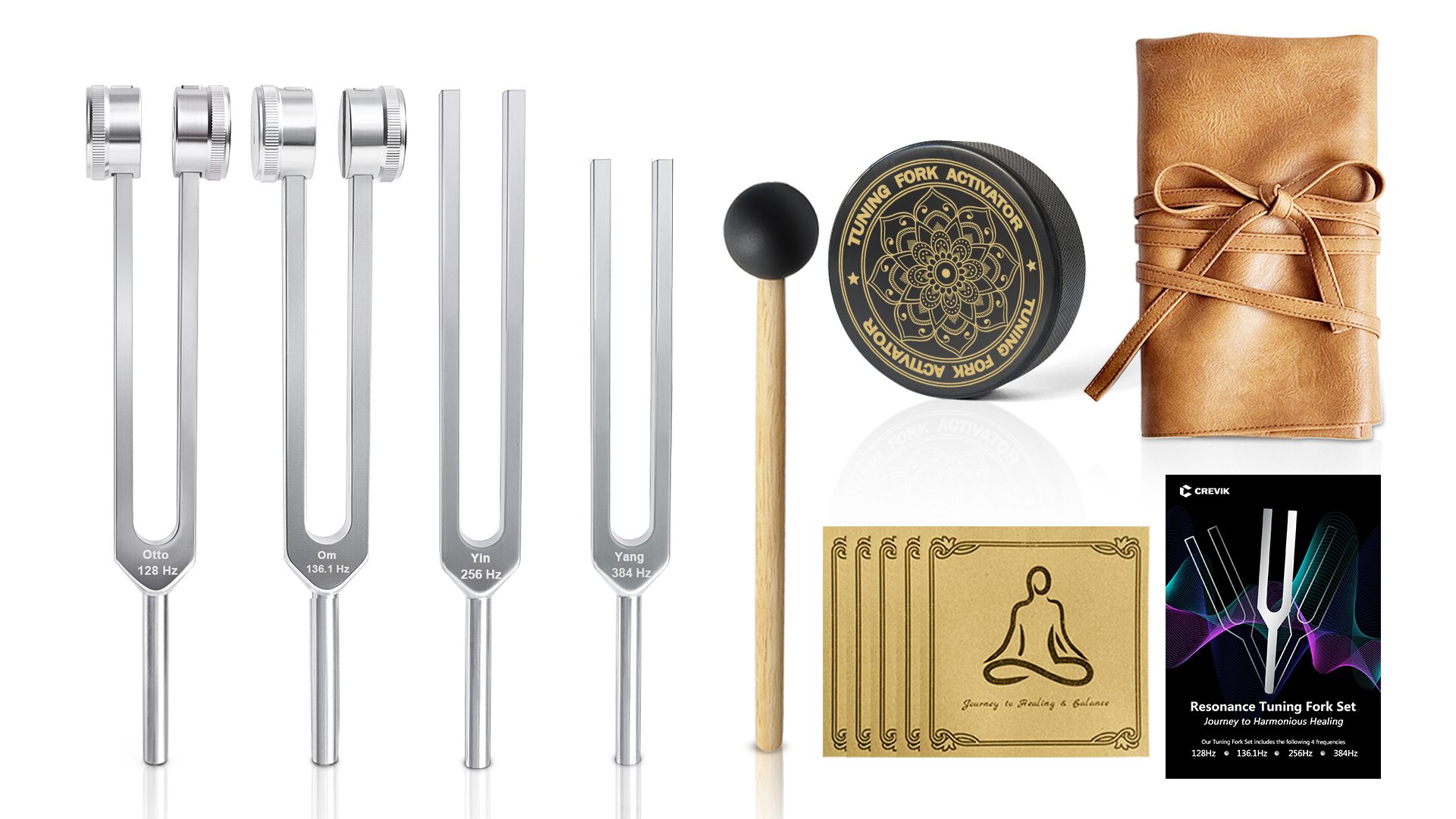
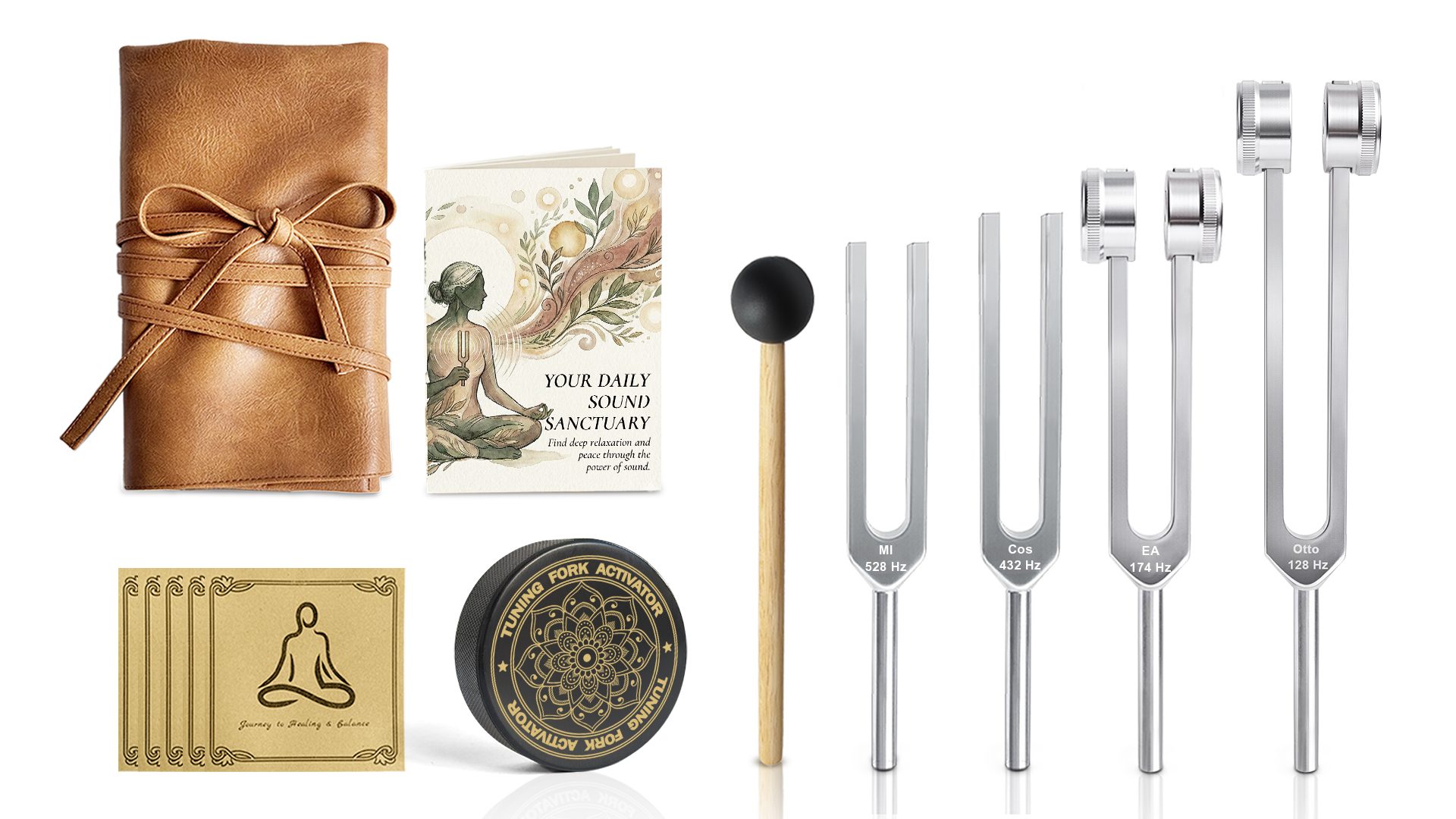
For an audible version, activate one unweighted tuning fork and hold it at a comfortable distance from the body while following the same sequence through the air. Keep the moving fork away from the eyes and ears. For a tactile version, return to PC 6, the forearm point located in the first article, and apply a 128 Hz weighted fork once on each side. Using one accurately located point is more instructive than touching twelve guessed locations.
Finish by repeating the opening movements. Warmth, tingling, clearer direction, or no strong change are all valid observations. The first purpose is to remember the map.
A five-minute memory practice
Walk the circuit with touch
Use broad, memorable directions first; return to one accurately located point for contact vibration.
01Notice first
Turn the head · roll shoulders · flex wrists · notice one breath
02Chest → hand
LU · HT · PC
03Hand → head
LI · SI · TE
04Head → foot
ST · GB · BL
05Foot → torso
SP · KI · LR
Finish by repeating the baseline movements. Warmth, tingling, clearer direction, or no strong change are all valid observations.
What You Can Take With You
You can now read the channel clock as a complete sequence rather than twelve isolated claims. Lung leads to Large Intestine, then Stomach, Spleen, Heart, Small Intestine, Bladder, Kidney, Pericardium, Sanjiao, Gallbladder, and Liver before the circuit begins again.
You can also reconstruct its movement without a chart. Hand yin travels from chest to hand; hand yang from hand to head; foot yang from head to foot; foot yin from foot back to the torso. That four-part grammar repeats three times.
Most importantly, you know how to use the clock without letting it become a verdict. It can organize observation, connect daily rhythm with traditional functions, and give a sound or touch practice a clear direction. It cannot diagnose an organ from the hour on a bedside display.
The next article moves from route to location. We will learn how proportional measurement, bones, creases, tendons, and movement help locate an acupoint—and how a weighted tuning fork changes the kind of stimulus that point receives.
References and Further Reading
- Huangdi Neijing: Lingshu, “Ying Qi”
- Chinese Text Project: Lingshu, “Jing Mai”
- WHO Standard Acupuncture Point Locations in the Western Pacific Region
- Neumann, “West meets east: Taking a stab at acupuncture point names,” Clinical Anatomy (2023)
- Traditional Chinese Medicine and Clinical Pharmacology
- History of ziwu liuzhu in the Jin and Yuan periods
- NHLBI: Insomnia—Causes and Risk Factors
- NHLBI: Sleep Apnea—Symptoms