One afternoon, you look up from the last task of the day and find your own reflection in the window. A few weeks ago, there was still enough light to see the trees across the street. Now the glass reflects the lamp, the edge of the table, your hand beside the keyboard.
Dinner is still to come. There are messages to answer, perhaps a journey home, perhaps someone waiting to tell you about their day. The evening has arrived while you were occupied with something else.
Across much of North America and Europe, autumn gradually changes the hours we spend in daylight. The return to standard time makes that change especially noticeable. As the afternoons darken, a few familiar actions can give the evening a comfortable beginning: putting work away, finding a place to sit, and taking time to hear a sound through to its end.
The Light Changes Gradually. The Clock Changes Overnight.
Autumn’s shorter days develop over weeks. As Earth travels around the Sun, its tilted axis brings the Northern Hemisphere toward the part of the year with fewer hours of daylight. The seasonal difference becomes more pronounced farther from the equator. In Edinburgh, the change reaches much further into the afternoon than it does in southern California.
Then the clocks move back.
In 2026, clocks go back on Sunday, October 25 in Britain and the European Union, and on Sunday, November 1 across most of the United States.
Sunset appears an hour earlier on the clock. A journey home that still held a little daylight on Friday may take place entirely after dark on Monday. The days have been shortening for some time, but the adjustment makes the difference suddenly difficult to miss.
Meanwhile, the rest of the schedule carries on. The train leaves at the same time. Dinner still needs preparing. There may be several hours between the darkening window and the moment you are ready for bed.
An Evening Indoors Has Its Own Light
Outside, the sky darkens. Inside, the kitchen ceiling light comes on, a laptop remains open, and the television lights another corner of the room.
These lights help shape the evening the body experiences. Our circadian rhythms—the roughly twenty-four-hour patterns involved in sleep, hormone release, appetite, and other functions—respond strongly to light and darkness. Meals, activity, and daily routines also help organise the timing of our lives.
Electric light allows the household to remain busy long after sunset. Its effect varies from person to person. In experiments examining evening light, researchers found considerable differences in how much light was needed to suppress melatonin, a hormone involved in signalling biological night. A room that feels comfortably subdued to one person may still be quite bright for another’s circadian system.
Begin with the room you use. Keep enough light for cooking, reading, and moving comfortably. Later, as bedtime approaches, switch off an unnecessary overhead light and finish the last screen-based task. Allowing quiet time with less bright artificial light before bed gives the end of the evening a gentler pace.
Daylight deserves a place in the routine too. A lunchtime walk or a few minutes outdoors can keep some of the shorter day available to you, especially when both the morning and evening commute happen in darkness.
There is room for both: activity while the day allows it, and a gradual easing of light and demands toward bedtime.
Give Unfinished Things a Place to Wait
Work often needs a more deliberate ending than the afternoon provides.
You may close a document while still composing its next paragraph. An unanswered email returns during dinner. A task left halfway through can be more persistent than several things completed.
In a study following employees and their work goals, unfinished tasks were associated with greater difficulty disengaging after work. Making specific plans for completing them helped participants who habitually struggled to detach.
Before putting work away, leave yourself a short note. Choose the task most likely to follow you into the evening and record its next step:
Tomorrow morning, open the quotation and check the shipping figures before replying.
That detail gives you somewhere to begin again. Put the note where you will find it, close the document, and move the work materials aside.
The available pause may come later in some households: after dinner has been cleared, a child has settled, or the last necessary errand is finished. Choose a moment when you can leave the next few minutes free.
This is a good place for a brief sound practice. The reminder is written, the table has been cleared, and your hands are available for something simpler.

Following One Tone to Its End
A tuning fork gives you a sound with a shape you can follow.
There is the first clear tone after activation, then a gradual softening. As you listen, the note becomes harder to distinguish from the room around it. Eventually, small sounds already present become easier to hear again: air moving through a vent, distant traffic, someone setting a cup down.
A weighted fork offers another way into the same attention. Through the end of its stem, vibration can be felt at a gentle contact point. The sensation changes as the fork loses energy. You can follow that change through the hand as well as through the ear.
This makes a short practice easy to pace. Activate the fork, notice its vibration or tone, and allow it to fade before repeating.
For a few moments, there is one thing to attend to. You can hear its beginning and remain with it as it grows quieter. Your hands can rest between activations. There is time to notice the last part of the sound before introducing another.
A Few Minutes to Begin the Evening
Allow around three to five minutes after closing the laptop, clearing the dinner table, or finishing another familiar part of the day.
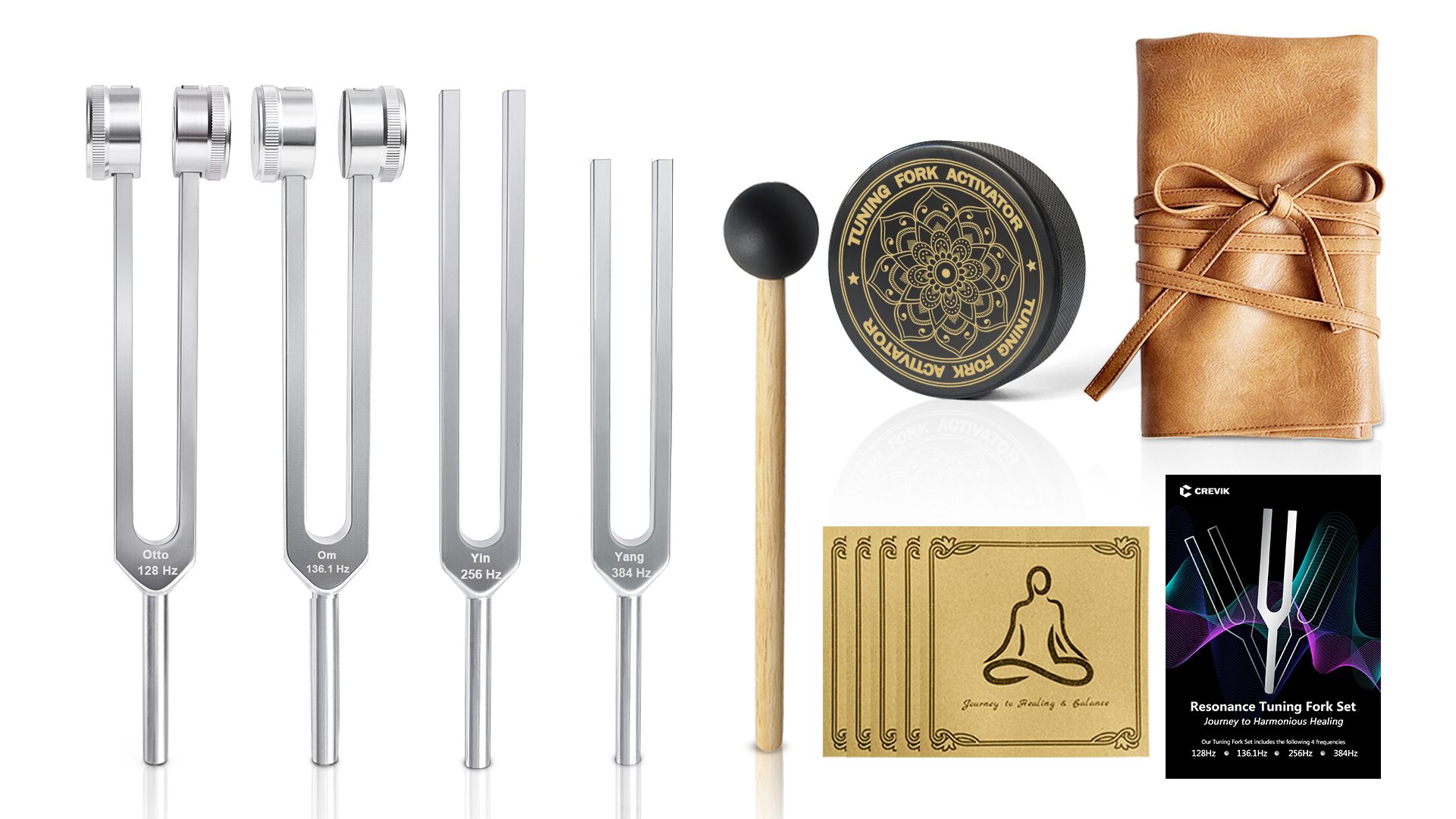
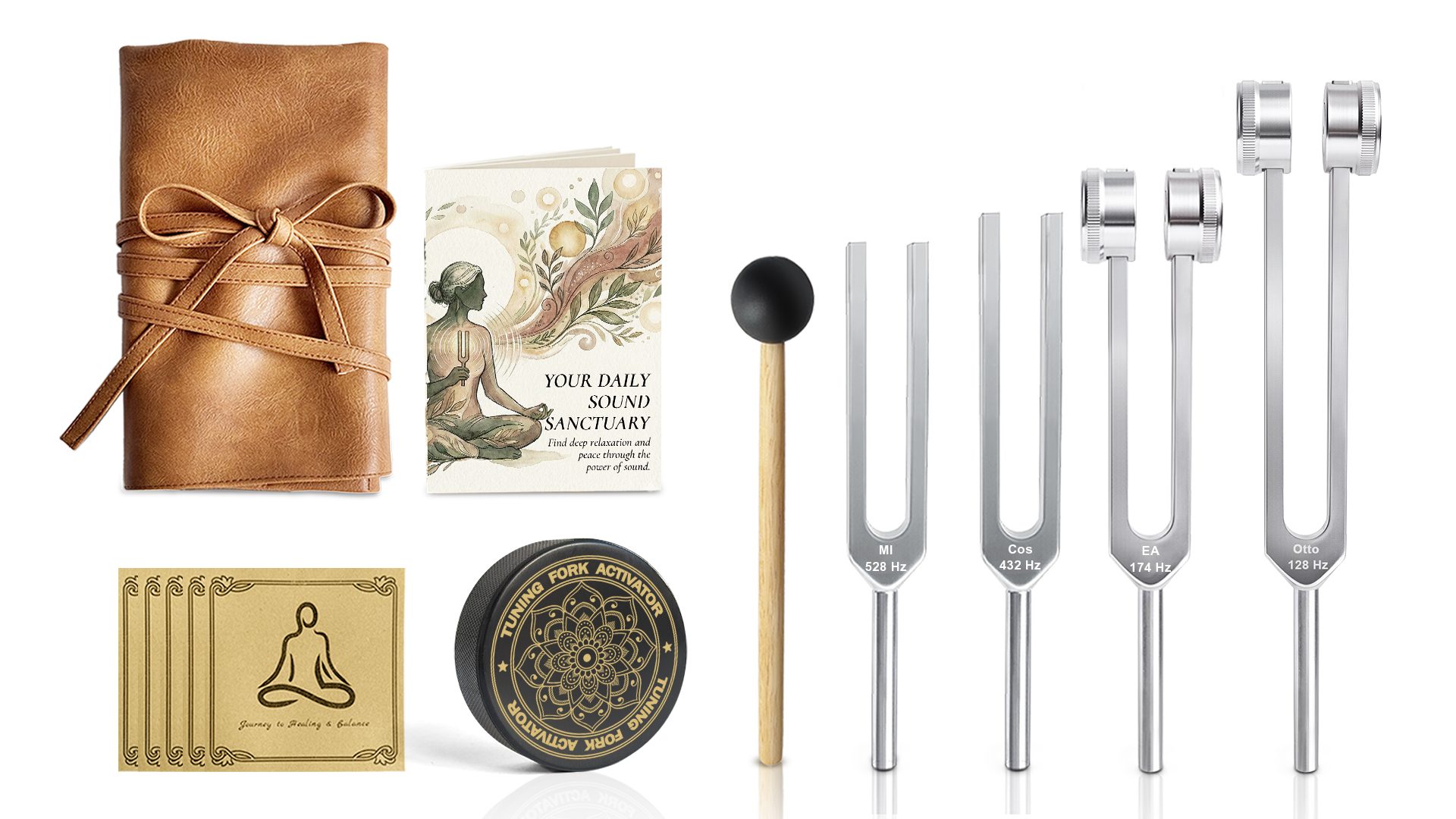
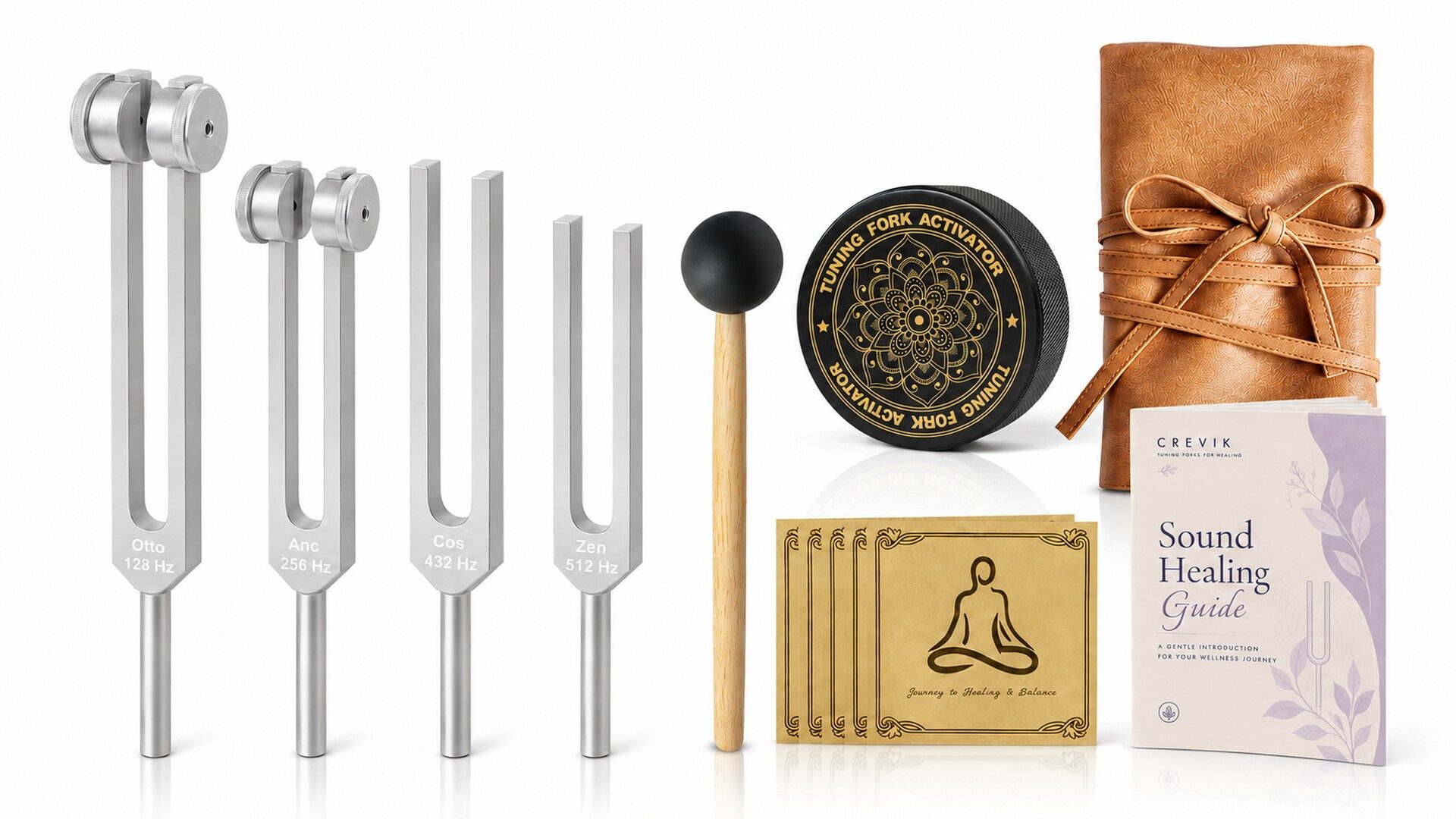
Set out a tuning fork and a suitable rubber activator. If you have both types, use a weighted 128 Hz fork for contact and a familiar unweighted fork for listening. The 128 Hz fork is included in CREVIK’s Resonance, Harmony, and Alignment Sets.
1. Put the last task down.
Write the reminder you need for tomorrow, then close the notebook or put the work device away. Place your phone somewhere it can remain for these few minutes.
Choose a chair where your feet can rest on the floor and your arms can be supported. Let your breathing find its ordinary pace.
2. Notice one point of contact.
Rest a forearm on your thigh or a cushion with the palm facing upward. Notice the hand’s weight, its temperature, and where it is supported.
Feel your feet resting on the floor. If the jaw is clenched, let it loosen a little. Spend a few breaths sitting comfortably before introducing the sound.
3. Feel the vibration.
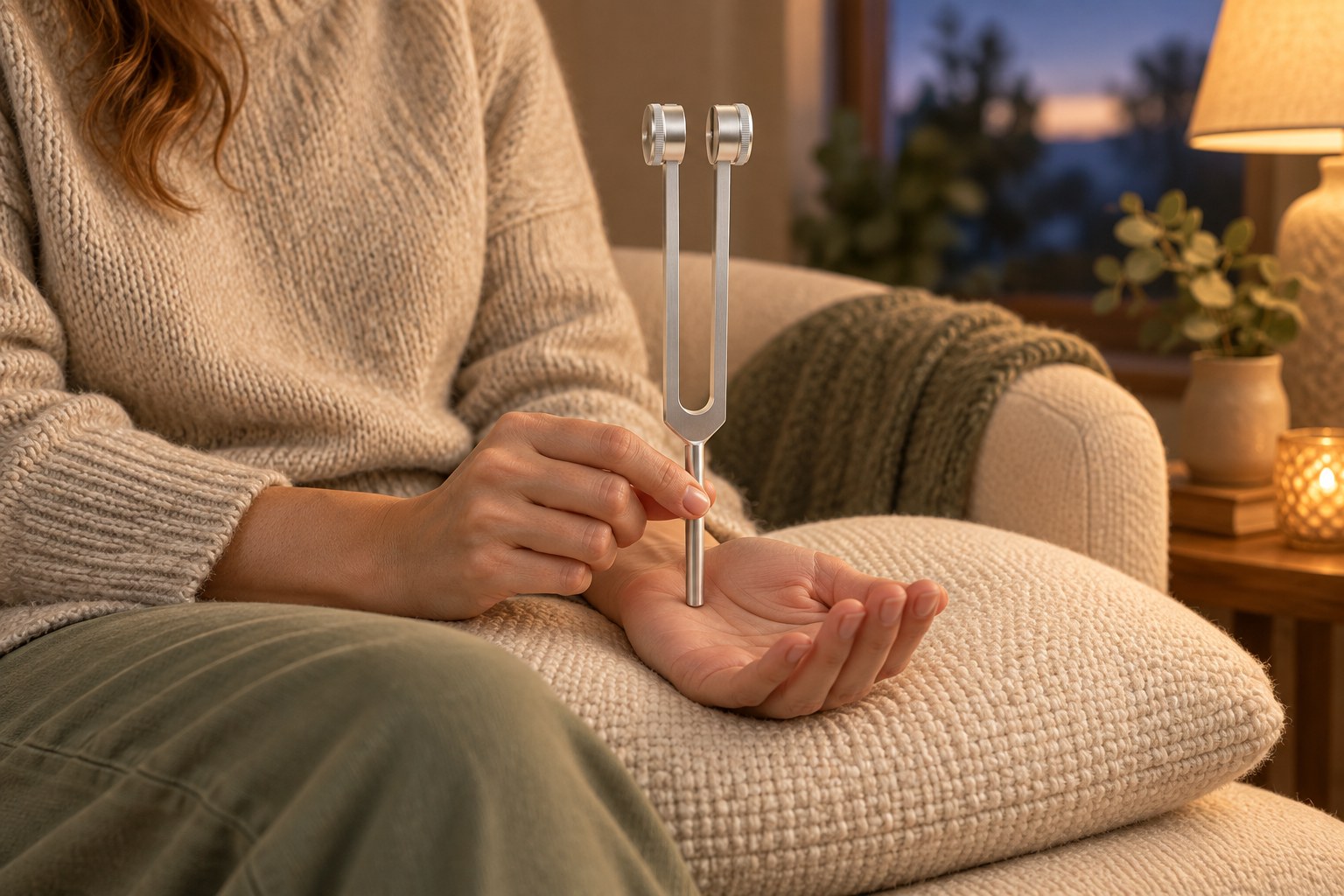
Hold the weighted fork by its stem and activate it gently on the rubber activator. Bring the end of the stem into light contact with the open palm of your other hand.
Keep the hand supported. Follow the sensation as it gradually diminishes, adjusting the contact so it stays comfortable. When the vibration has faded, lift the fork away.
Repeat once if you wish, leaving a pause between activations. Notice where the vibration is clearest and how the sensation changes toward the end.
4. Listen through the whole tone.
Set the weighted fork down and choose an unweighted fork. Activate it gently, then hold it by the stem in the space beside you, several inches from the ear at a comfortable volume. Keep it clear of the ear itself.
Follow the tone as it becomes quieter. Leave a little time before sounding it again. One or two activations give you time to hear the change from a distinct note to the ordinary sounds of the room.
If you are using only an unweighted fork, spend a little longer here, with a pause between activations.
5. Let the evening continue.
Put the fork down and remain seated for a few natural breaths. Feel the support beneath your feet and forearms again.
Notice what you would like to do next. You may be ready to prepare dinner, read for a while, or join someone in another room. Stand when you are ready and carry on with the evening.
Keep the Moment Familiar
A practice becomes easier to return to when it belongs somewhere recognisable in the day. Research on habit formation found that repeating a behaviour in a consistent context helped it become more automatic over time.
Choose an existing moment you can recognise even as sunset continues to move: the computer closing, the dinner dishes put away, the beginning of an evening alone. Keep the fork and activator somewhere convenient.
Some evenings will allow several minutes. On a crowded evening, there may be time for one tone and the quiet after it.
Outside, the daylight will continue to shorten toward winter. Inside, you can make a few small arrangements for the hours ahead. Tomorrow’s reminder is written down. The work is put away. After the last tone fades, you leave the notebook closed and sit down to dinner.