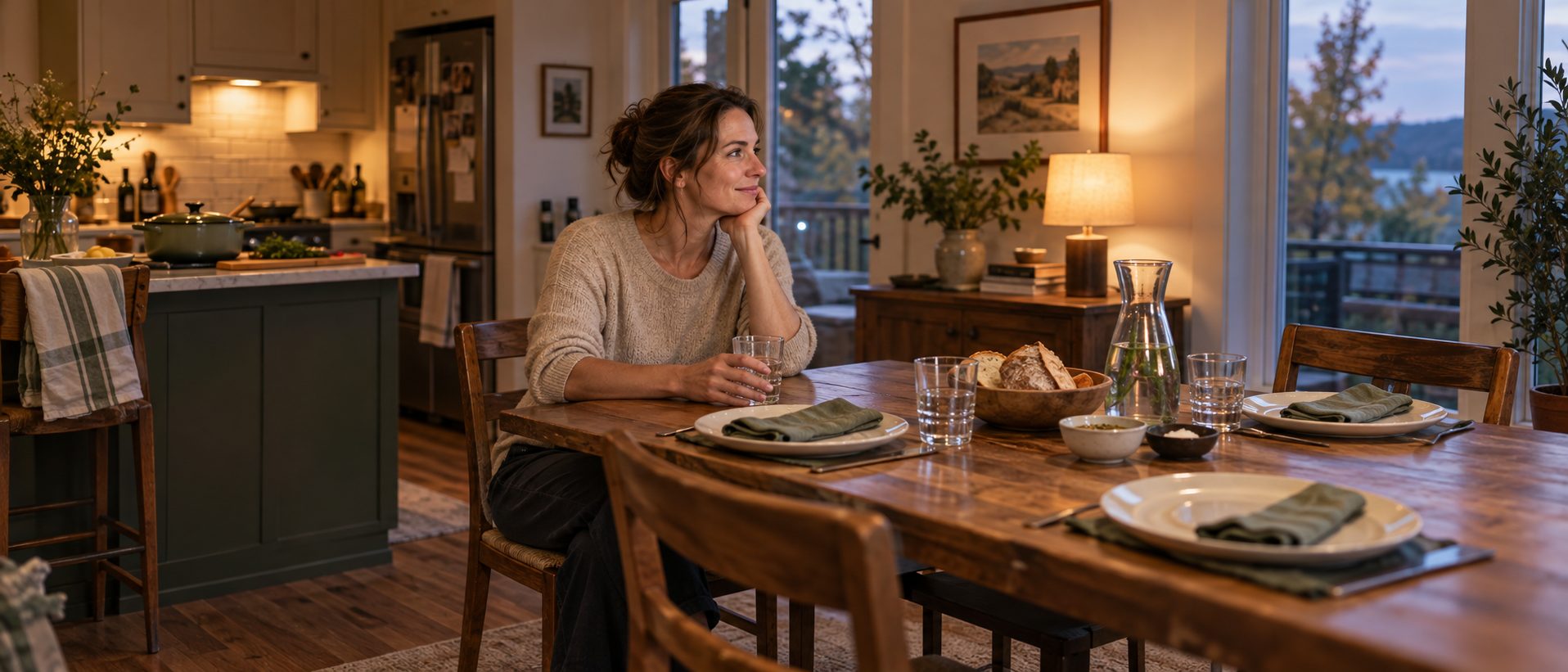
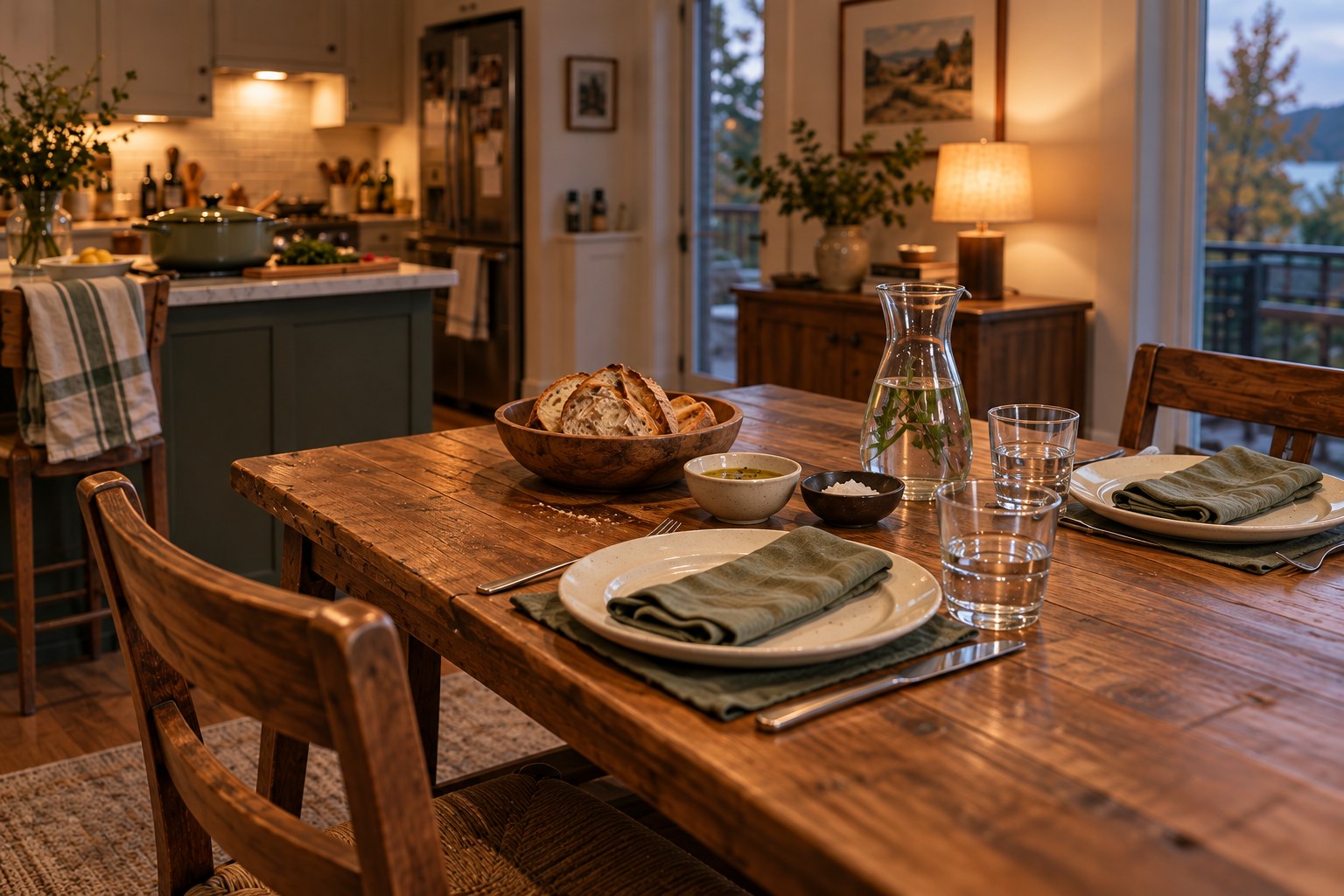
The table is set. There is water in the jug, something warming in the oven, and a place cleared for coats. Your phone lights up: Leaving now. See you soon.
You read the message, then look around the room again.
A glass needs moving. There is a mark on the counter you had not noticed before. You straighten a napkin, check the food, and wonder whether you should have made something else.
You have been looking forward to this. That is part of why every detail suddenly seems to matter.
The last few minutes before friends arrive can feel surprisingly unsettled. You know these people. They have seen your kitchen before. Still, you find yourself imagining the room through their eyes, or hoping the conversation will come easily between two friends who have never met.
And somewhere in all that anticipation, you are still moving, although there is very little left that needs doing.
This is a good moment to pull out a chair.
The Last Few Things
Hosting involves a particular kind of attention. While you are doing one thing, you are keeping track of several others: when to take the dish out, whether there is enough ice, who said they might arrive late.
It can be satisfying work. There is pleasure in choosing food for people you know, bringing out the good serving bowl, remembering how someone takes their tea.
By the time everything is nearly ready, though, you may have spent hours looking ahead. Even when you stop, your thoughts keep moving through the evening.
What if the food is late? Will everyone have enough? Should I have invited one more person?
Sometimes the worry is smaller and harder to name. You want people to enjoy themselves. You want the effort to have been worthwhile. Perhaps it has been a while since you had anyone over, and you have forgotten how ordinary a room can look just before it fills with people.
These thoughts often settle once the first friend is standing in the doorway, taking off a coat and telling you about the journey. Before that happens, it helps to give the preparations an ending you can recognise.
Knowing When to Leave the Table Alone
Take one practical look around.
Check the cooking times and set any timers you need. Put drinking water and glasses where they are easy to reach. Make sure there is somewhere to sit and somewhere to put a bag.
If someone is helping, give them a task they can take over completely. Filling the glasses or greeting the next arrival is easier to hand over than the vague instruction to help with whatever needs doing.
Then leave the table as it is for a while.
There will probably still be something you could improve. There usually is. A different serving spoon, a better arrangement of chairs, a dish you could transfer into a prettier bowl.
You may recognise the point when these small adjustments stop being useful. You move something, step back, and move it again. You open the fridge without needing anything.
That is often when a drink of water and a seat would do you more good.
Choose a pause while the preparations allow it, with the necessary timers set. Sit somewhere you can hear the door. Keep your water nearby and put the phone down within reach.
You can let the next few minutes remain unfilled.
Listen to the Room First
Once you sit down, you may notice how much sound has been accompanying the work.
The extractor fan is still running. Music is playing in the next room. A television has been talking to an empty sofa. You had scarcely noticed any of it while carrying plates back and forth.
Turn off what has finished serving its purpose. Leave the sounds you need.
You might hear water moving through the pipes, a cupboard closing upstairs, or a car passing outside. The house can remain an ordinary, occupied place. There is no need to arrange a perfect silence.
Feel where the chair supports you. Let your feet rest on the floor. Set down whatever is still in your hands.
There is often a small surprise in realising how tightly you have been holding something: the phone, a tea towel, even your jaw. Let your hands rest and take a sip of water.
If you have a tuning fork, this is a simple place to use it.
A Brief Sound Practice Before the Doorbell
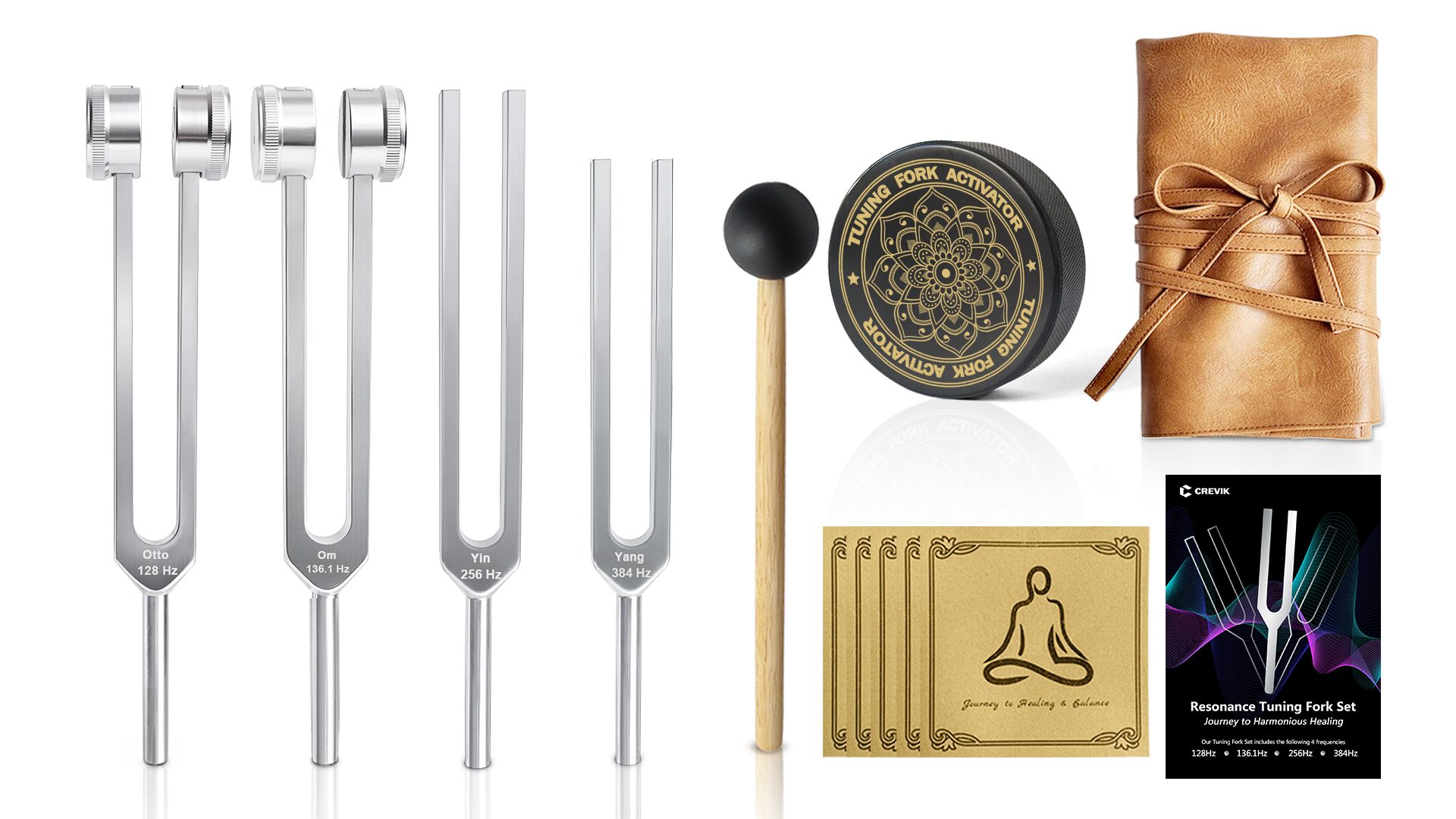
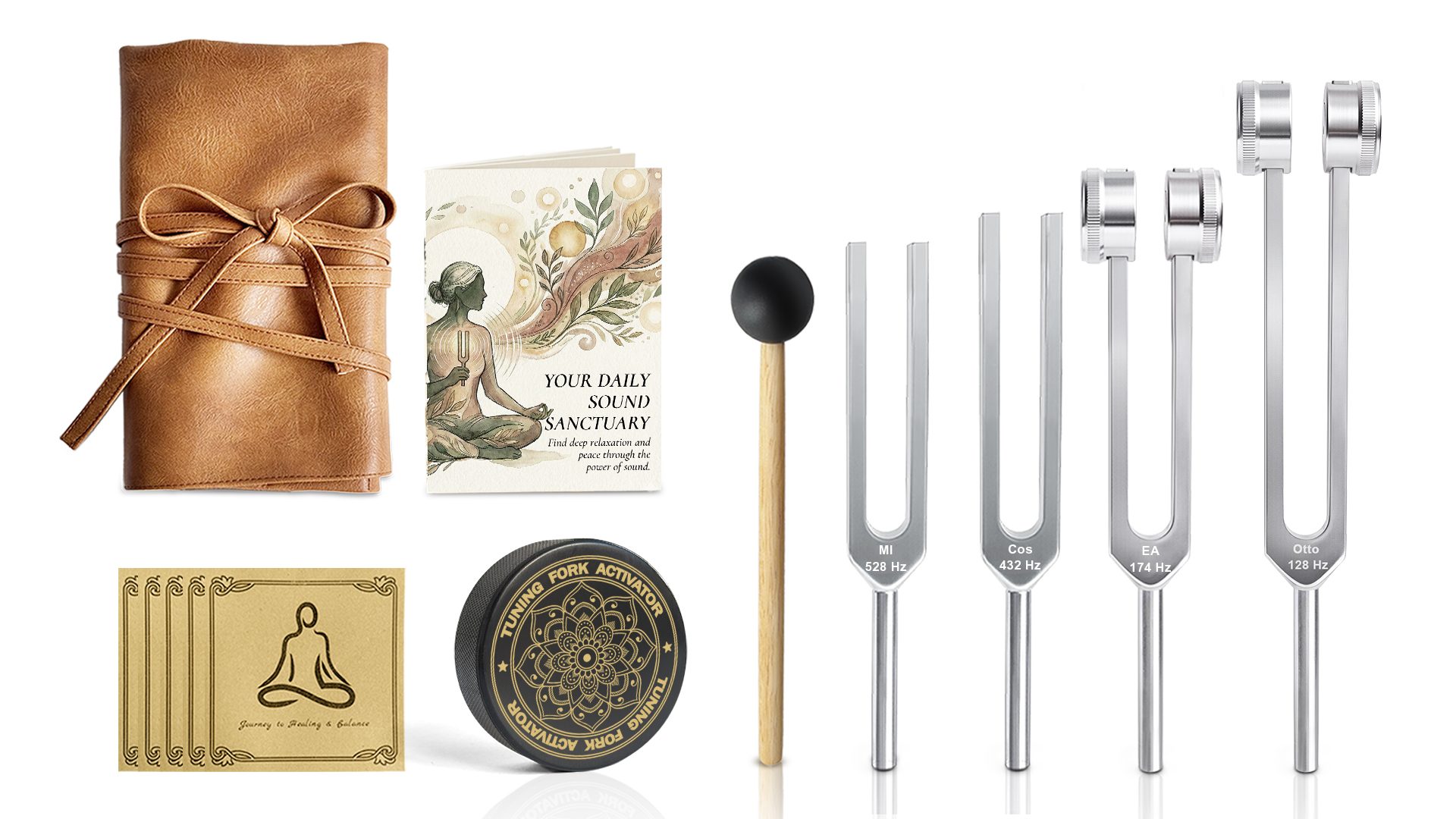
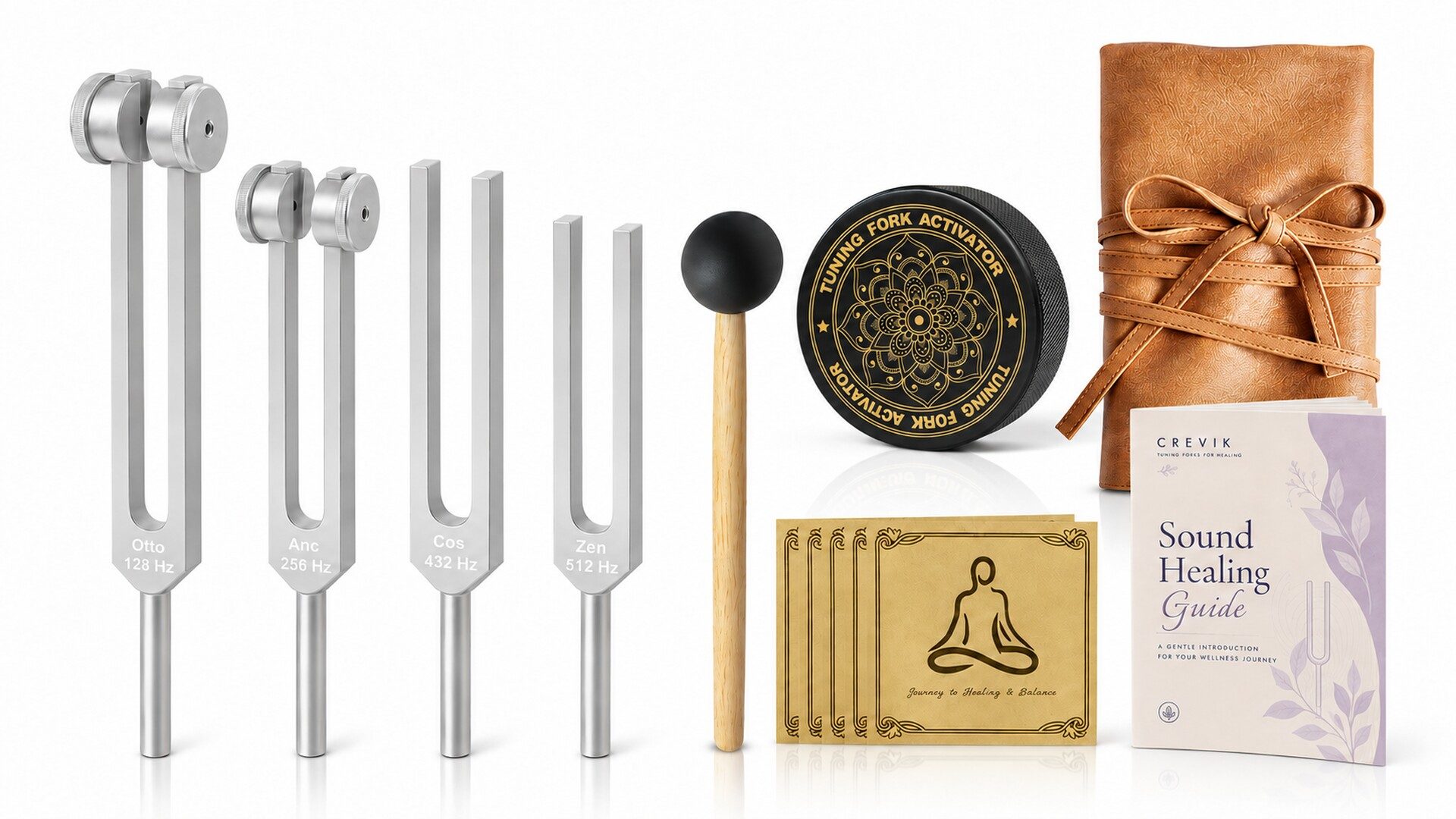
Choose one familiar tuning fork and a suitable rubber activator. An unweighted fork works well for listening. You can leave the rest of the set in its pouch.
Allow two or three minutes, if you have them.
Hold the fork by its stem, keeping the tines free, and activate it with a gentle tap against the rubber. Bring it into a comfortable listening position, leaving space between the fork and your ear.
Listen at the volume available. A light activation is enough.

At first, your attention may stay with the meal. You might remember the bread, wonder about the traffic, or start mentally counting the chairs again.
When you notice this, listen for the note. There is nothing else to keep track of in the practice.
As the sound softens, let your hand lower and rest for a moment. Feel the chair beneath you. Look around from where you are sitting.
The room may look a little different from here. You can see the places where people will sit, the water ready to pour, the bowl you chose earlier. You have spent the afternoon making these arrangements. Now you have a moment to enjoy seeing them.
If there is time, activate the fork once more.
Keep your breathing easy. You do not have to count breaths or reach a particular feeling before finishing. You may still be excited, a little restless, or pleased that you have finally sat down.
When you are ready, put the fork and activator away, clear of the food and serving space.
If the doorbell rings sooner, put them down and answer it.
When the Guests Arrive
The first arrival changes the room quickly.
There is a coat to take, a dish someone has brought, a familiar voice saying how good the food smells. Your friend asks where to put the bag, and the evening begins to take its own shape.
Let people help when they offer. Give someone the bread to slice. Ask another person to carry the water. A friend standing beside you in the kitchen can be good company while you finish the last thing.
As the room fills, listen to it again.
The music that sounded gentle in an empty room may now be competing with several conversations. Lower it, or turn it off during the meal. Keep enough light for people to see one another comfortably. Less background noise and clear sight of faces make conversation easier, especially for guests who have difficulty hearing.
These are small adjustments you can make as the evening unfolds. There is no need to anticipate everything before anyone arrives.
At some point, take your own seat. Eat while the food is warm. When someone begins telling you something, give yourself time to hear it before getting up again.
There may still be a serving dish on the counter. You can bring it over in a moment.
For now, your friend is halfway through a story, and you want to hear what happened next.